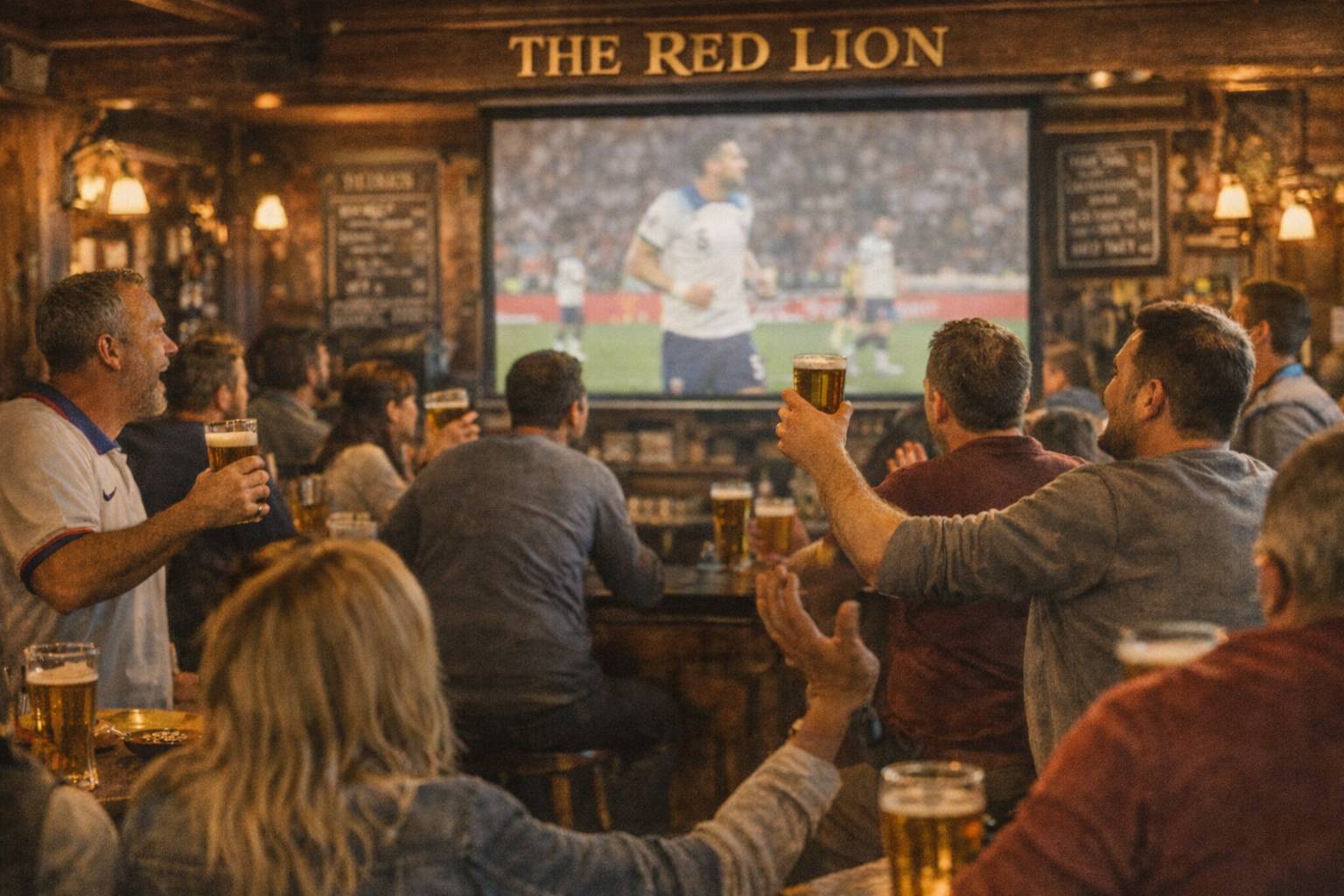
What the last World Cup did for UK pubs (and what 2026 could mean for your business)
When the football is unmissable, people don’t just watch it, they gather for it. And that shift from “watching at home” to “watching together” is where the biggest commercial upside sits for hospitality. The last men’s World Cup (Qatar 2022) didn’t land in the easiest trading window (winter, cost pressures, shorter daylight, different kick-off times)… and yet the on-trade still saw huge spikes on key matchdays.
So, what did it actually deliver last time, and what could the 2026 World Cup (June 11 to July 19, 2026) mean for publicans who plan properly?
Match Days Drove Serious Sales Spikes
Across multiple industry trackers, the pattern was loud and clear: the biggest games created big, immediate uplifts, and even the group stage had standout days.
A few of the most useful benchmarks from 2022:
Sales jumped 81% on Monday, 21 November 2022 (when England played Iran and Wales played the USA).
Sales were also up 41% on Friday, 25 November 2022 (England vs USA / Wales vs Iran matchday).
One analysis found draught volumes rose sharply on that first home-nations matchday, around 436 pints per pub on average, equating to an extra ~£906 in income for operators on the day (based on their dataset).
UK pub/bar trade coverage also reported ~33% sales increases during major England fixtures (example: England vs USA).
And it wasn’t just England games: CGA data showed a 35% uplift in drinks sales in England’s on-premise on Saturday 10 December 2022 (England’s quarter-final day).
What stood out most wasn’t just the numbers; it was the pattern.
Pubs that treated the World Cup as a planned trading period, rather than a background event, performed best.
Why 2026 is a different (and bigger) opportunity
Fast forward to 2026, and the conditions look even more favourable for publicans.
A summer tournament means longer days, beer gardens, and a more social mindset.
A longer format with more matches creates repeat reasons to visit
Football becomes part of the summer calendar, not a one-off moment
For you, this is where running your own business really comes into its own. You’re not just showing sport, you’re creating atmosphere, routine, and loyalty over several weeks.
The World Cup becomes something customers plan their weeks around. And that’s when pubs win.
What we see our strongest publicans do differently
From experience, the most successful World Cup trading periods don’t rely on big gestures or expensive refits. They come down to smart planning and confident hosting.
Here’s what consistently makes the difference.
1. Turning fixtures into reasons to visit
Rather than “football on”, it’s:
Big screen, sound on, game-day energy
Clear messaging on which matches matter in your pub
Creating a sense of “this is where we’re watching it”
Customers don’t want to decide between ten pubs. They want to know where the atmosphere will be.
2. Locking in spend early
Pre-booked tables, reserved areas, or simple matchday offers help turn interest into commitment.
It reduces uncertainty, helps with staffing, and means customers arrive already invested in the experience – not just popping in for one drink.
3. Making it easy for customers to spend more
This isn’t about pushing sales. It’s about removing friction:
Sharers that suit group watching
Simple drinks bundles for kick-off and half-time
Clear offers that staff can deliver quickly
When service is smooth, customers stay longer. When they stay longer, spending follows naturally.
4. Staffing for peaks, not averages
World Cup trade comes in waves.
Strong pub partners plan rotas around:
Pre-match build-up
Half-time rush
Post-match linger
Getting those moments right protects both revenue and atmosphere – and keeps teams confident behind the bar.
5. Showing up locally
The most effective promotion is rarely polished or corporate. It’s human.
A quick video of screens going up.
A photo of the garden ready for kick-off.
A weekly post saying, “This is what we’re showing and why it’ll be good here.”
That’s how pubs stay front of mind when customers are deciding where to watch.
What this means for you and other publicans
Major tournaments like the World Cup highlight something important about running a pub with the right support behind you.
You’re not relying on constant reinvention.
You’re building around moments that already matter to people.
And you’re doing it in a business that thrives on connection, not convenience.
For existing publicans, 2026 is a chance to:
Strengthen regular trade through repeat allowing visits
Build loyalty with new customers who discover your pub through football
Deliver a strong summer trading period with momentum
For you, thinking about running your own pub, tournaments like the World Cup show the upside of the role:
You’re in control of your business
You decide how big the opportunity becomes
And you’re supported by a pub partner model designed to help you plan, not go it alone
The World Cup doesn’t guarantee success.
But with the right planning, it creates opportunity.
At Stonegate Pub Partners, we’ll be working closely with our publicans as 2026 approaches – sharing insight, best practice, and practical support to help make the most of the tournament.
Because when pubs are prepared, football doesn’t just fill seats.
It builds businesses.